
The World of Today
Koyaanisqatsi.
In the Hopi language,“life out of balance.” Perhaps more familiarly to you, the 1982 cult classic by Godfrey Reggio, scored by Philip Glass.
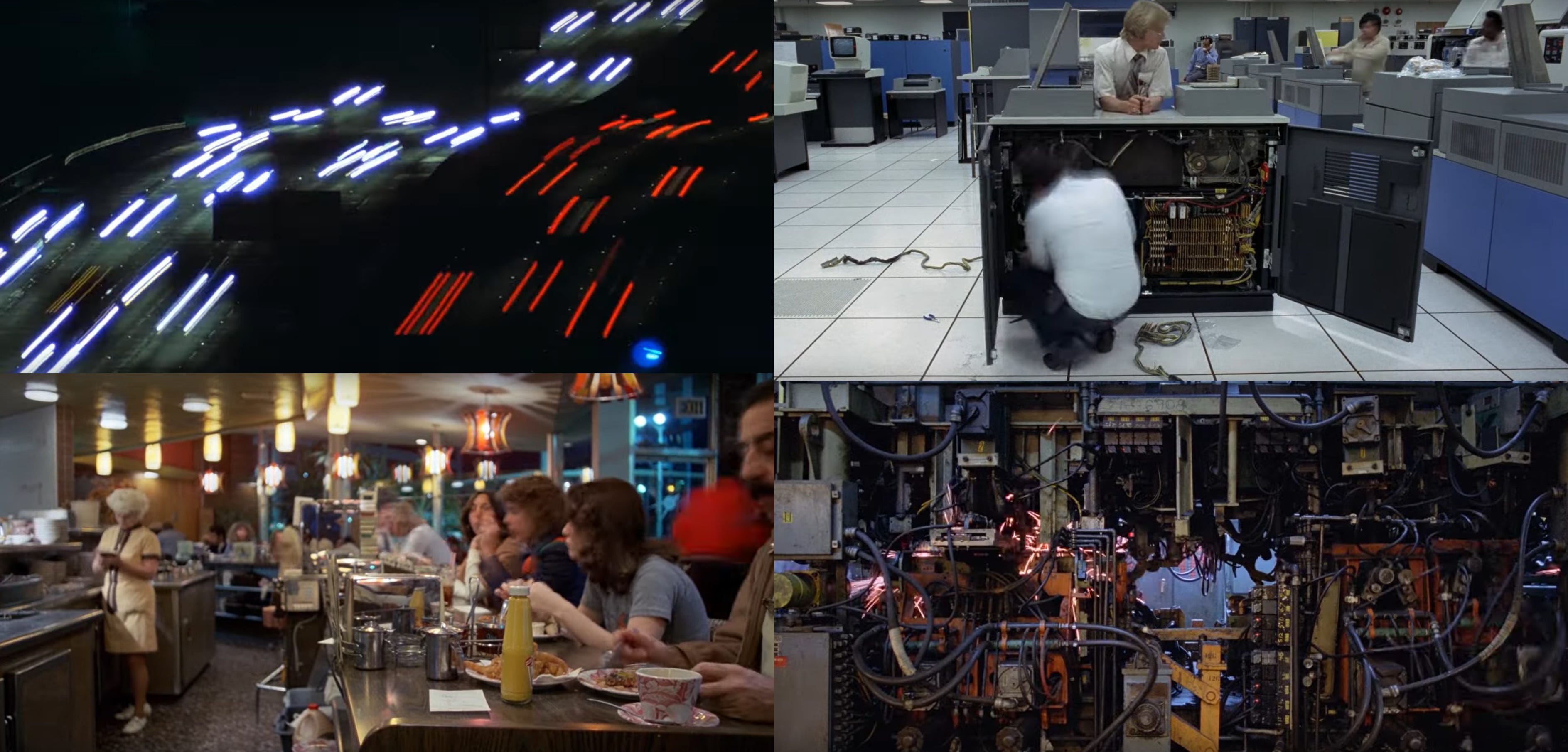
It’s a vibes-y film, without question. For eighty-six minutes, the viewer is induced into a trance-like state, awash in cinematographic images of nature and the seeming cacophony of 20th century life (though undoubtedly quaint by our terms). The entire film is absolutely bereft of dialogue, relying only on the imagery and contemplative score by Philip Glass in driving its dramatic arc forward.
My introduction to Koyaanisqatsi was serendipitous. During COVID, I indulged in my curiosity to peruse a relative’s school papers at a music conservatory, dating nearly forty years. One syllabus for a film class entailed a screening of Koyaanisqatsi. By no means was I ever, or am, a film connoisseur. But I do love a solid Glass score (The Hours, anyone?), and I was nevertheless intrigued.
I really do recommend viewing the film, although it may not be everyone’s cuppa tea. Still, it’s a provoking experience. One perennial notion — the incongruities of “nature” and “technology” — is quite in-your-face.
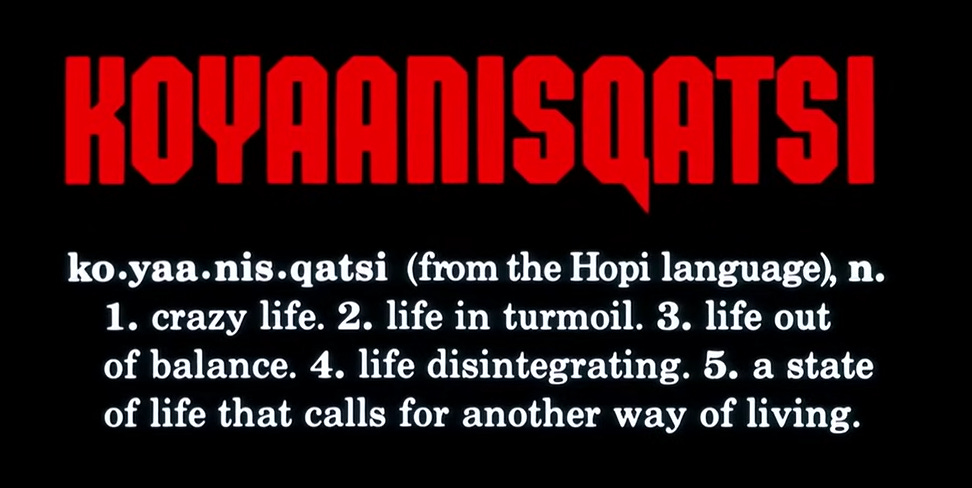
I won’t litigate that debate today. What I do take away from Koyaanisqatsi, however, is the rationale for why I write here. In the ending title card for the film, several translations for the eponymous film are given. Any of these definitions could describe The Vibes © today. Many of you would probably find uncontroversial the idea that the vibes are off.
The inimitable Kyla Scanlon notably coined the phrase “vibecession” in 2022 to characterize the divergence between the extraordinary strength macroeconomic aggregate statistics during the Biden presidency, and the prolific pessimism of people’s economic sentiments. Among the most telling of economic sentiments throughout the Biden years is survey participants reporting great optimism about their financial straits, and yet, experiencing a bitter outlook on current and future trends.
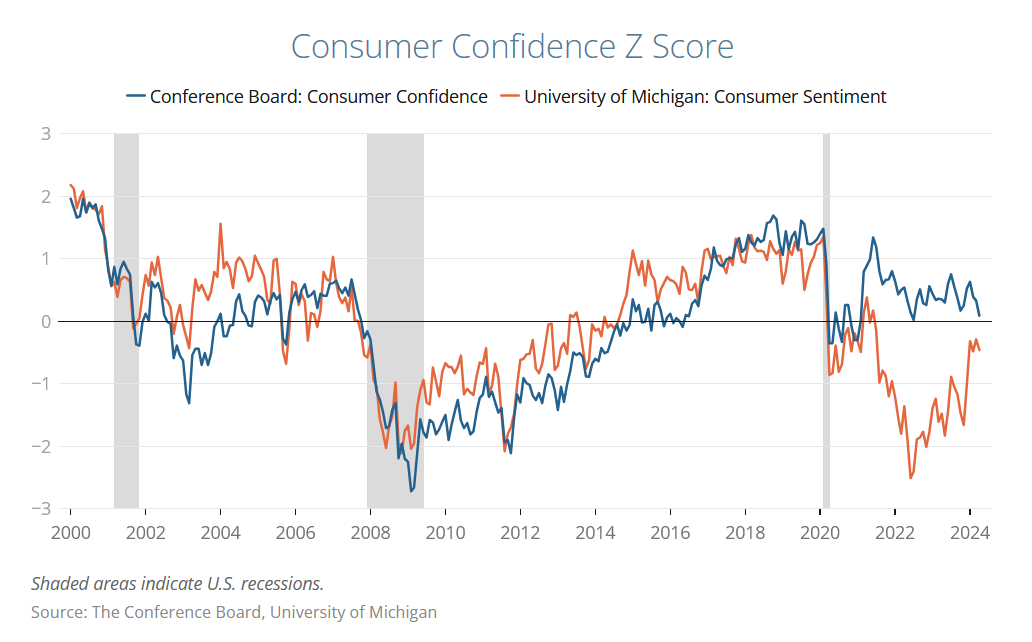
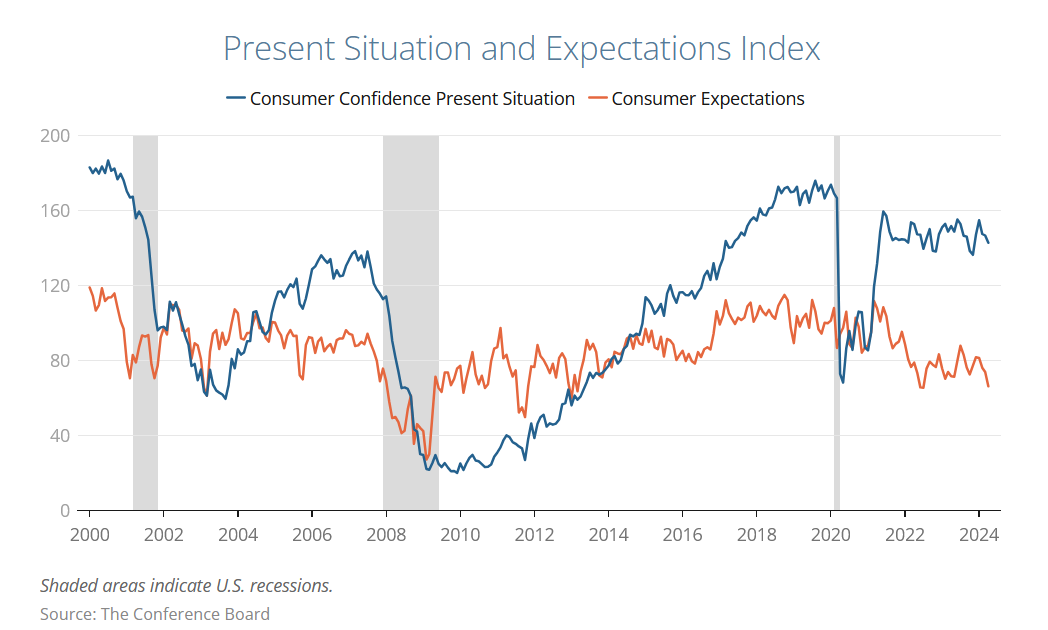
Clearly, something’s off. And it’s making people uncertain, confused, and angry. All natural emotions to feel! It’s only human to do so. But it’s unsatisfactory to only feel, we must strive to understand why we feel this way.
Ergo, my first mandate in writing this Substack: What does it mean for life to feel — and perhaps to be — out of balance?
The World of Yesterday
Astute readers will observe that the title of this post bears resemblance to the 1942 memoir of Stefan Zweig (1881-1942) titled The World of Yesterday: Memoires of a European (Die Welt von Gestern: Erinnerungen eines Europäers). I would be hard-pressed to find a final benediction of one’s life story more harrowing than that of Zweig’s; to date, it is the only nonfiction work I have wept at. Zweig would take his own life one day after its publication.
An Austrian Jewish playwright, Zweig writes of the bard’s and the intellectual’s life at the apex of European society under Habsburg hegemony. Even as a translation, it is a work of melodious, florid writing, where every bit of minutiae of boyish life in the high culture of Viennese society is savored. Brilliant, and above all, wonderfully human writing flourishes in its pages.
The work is as much of an insight into the sweeping changes of eras — the world-historic innovations, horrors, and traumas that accompanies epochal shifts — as it is a lament of the old world lost. Doomscrolling through TikTok will beget attempted analogies to the interbellum between the world wars of the last century, self-assured influencers (and haute finance CEOs) foretelling a third global conflict to come. I do not think it’s healthy, nor rigorous nor true, to assume the inevitability of doom (as a reassurance to you, I’m often so guilty of this, but I promise I will try to not do this on Alphabet Agency).
But what is clear is the world of yesterday — our world of yesterday — is, in many respects, fading away into our collective memory. Political, social, and economic mores minimally appear to be undergoing profound paradigm shifts, if not outright structural evolution. The foreboding polycrisis of climate change, geopolitical and domestic turmoil, disease, and the malaise of our cultural and governance institutions looms.
How we understand our responses to the changing of the seasons of eons, in the rigor of institutional structure and in our humanity, and how all those who came before us did the same, is my second mandate.
The World of Tomorrow
Oracle-ing is sexy. Dragging people who are bad at oracle-ing on X is fun (for some).
I can’t predict the world of tomorrow. I’m sorry, I really can’t.
But what I hope to provide to my readers is a sense of reassurance that in times of cynicism, distrust, and heightened reactions to the vicissitudes of the world, we can at least try to make sense of the madness together.
I am as confused about many facets of our world as perhaps you may be.
My third mandate is to say let’s not be confused alone, left to broil in the despair of isolation.
Let’s work through this great mystery of life and our world together.
In his closing words, of The World of Yesterday and of life, Stefan Zweig leaves us his parting words, his final testament to the human spirit:
The sunlight was full and strong.
As I walked home, I suddenly saw my own shadow going ahead of me, just as I had seen the shadow of the last war behind this one.
That shadow had never left me all this time, it lay over my mind day and night.
Perhaps its dark outline also lies over the pages of this book.
But in the last resort, every shadow is also the child of light, and only those who have known the light and the dark, have seen war and peace, rise and fall, have truly lived their lives.
We need not exercise hubris that war and pestilence and calamity is sure to come. We can, nonetheless, find solace that in spite of all to come, in all of the turbulence life tends to impose on us, we will have truly lived.