
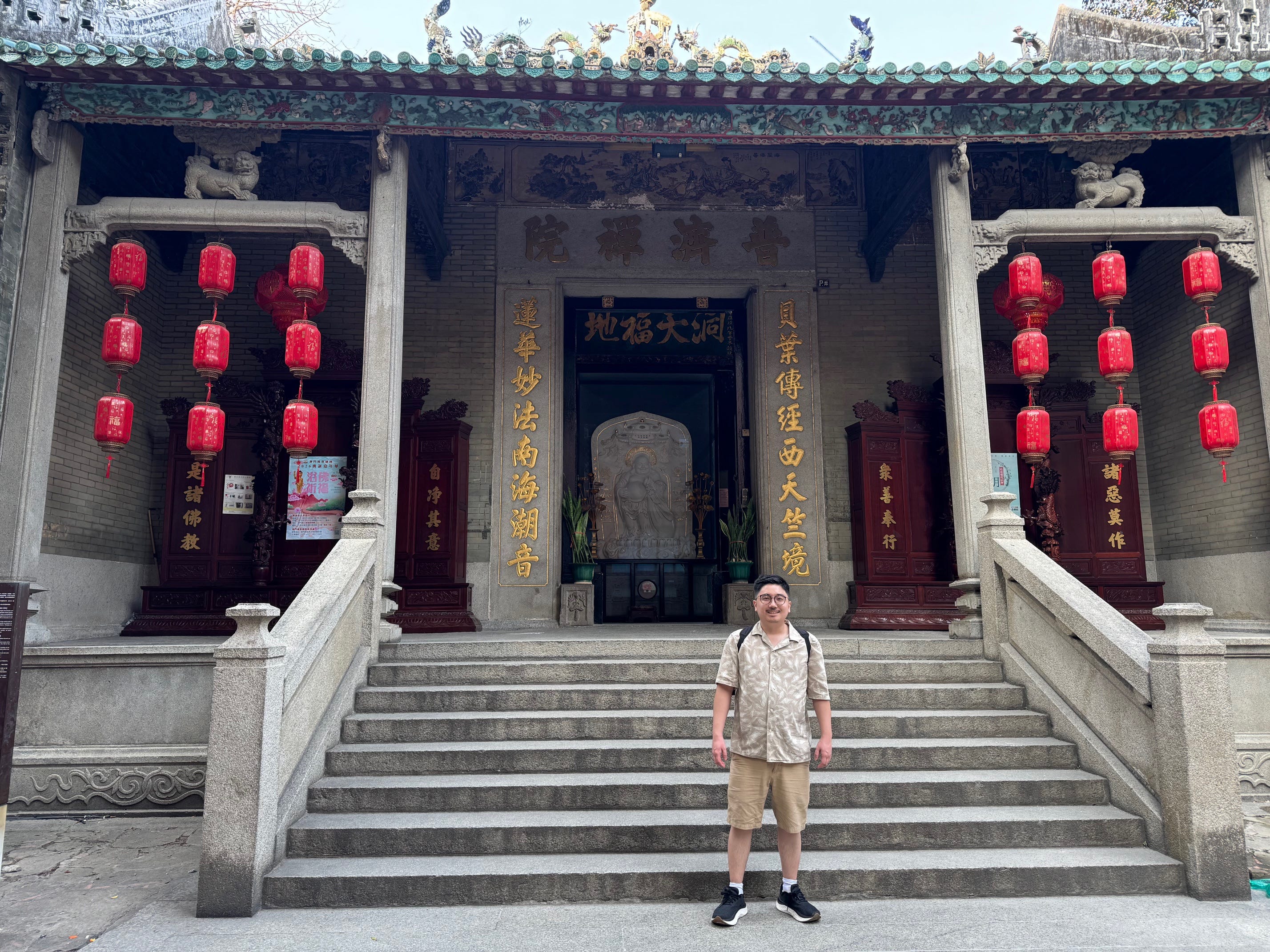
On July 3, 1844, Caleb Cushing, President John Tyler’s representative to China from the United States, and Keying, a mandarin of the Qing Dynasty, signed the Treaty of Wangxia at the Kun Iam Temple in Portuguese Macau.1 Wàngxià is an anachronistic name; today Macauans call this part of town Mong-Há (storefronts, for instance, bearing Portuguese names like Comidas Mong-Há).
I visited the Kun Iam Temple to witness this historical site, although as far as I could tell, there was no inscription marking the location of the treaty’s signing. Among the earliest formal interactions between the neophyte American Republic and the centuries-old veteran Qing Dynasty. the Treaty of Wangxia constituted one of the “unequal treaties” established between China and western powers, imposing unfavorable trade terms and foreign extraterritoriality on the Qing. An act that, unquestionably, perpetuates its mark on the contemporary dealings of these storied powers.
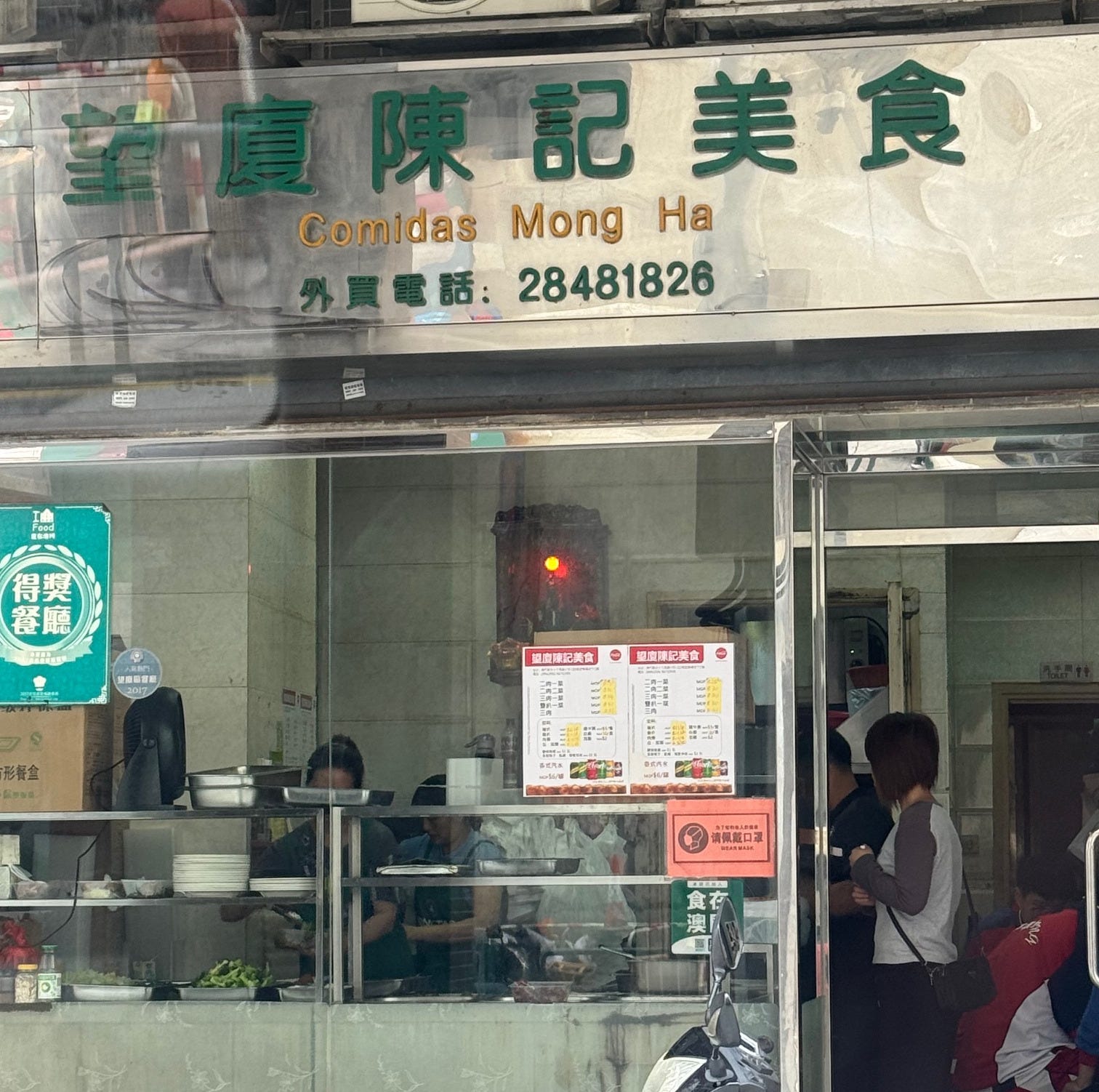
All space has historical memory. At home, I’ll stand around at timse and contemplate all that transpired on that plot of land in the Cretaceous period or in the Dutch colonial era of New York. In motivating travel, I drift towards those sites where the courses of nations were forged. My obsession with “spatio-temporal” memory need not be confined to the grandiose. Among the conglomerate of Chinese and Portuguese signage to the spoken chorus of Cantonese in the streets, I wonder about the stories of the shopkeepers (Macau, rich in dense urban zoning and its high-rise tenement housing, is also prolific in small businesses), their experiences, and all that they have seen in life.
Macauans venerate space and the land on which it exists, for Tou Tei (土地) Kun, or small shrines to the earth god in the traditional folk religion (a syncretic whole of Buddhist, Daoist, and Confucian elements), are commonplace outside residential areas, stores, and even within supermarkets.2 The Chinese name of the city, Àomén (奧門), means “inner gate”, or as the Portuguese colonists at the height of Macau’s Senado period euphemistically termed “the gateway to the cross.”3 Indeed, the inner gate has always existed as a juncture of spaces: “east” and “west,”4 “core” and “periphery,” strands of religious influence, and trade spanning from Goa to Malacca to Japan.


Here’s to, as Tyler Cowen puts it, being a travel addict, and finding those spaces with deep historical memory that resonate with us.
-David
Macao – The Formation of a Global City, Edited By C.X. George Wei. See Chapter 7. The Cushing Mission to Macao and US Imperial Expansion in Nineteenth-Century Asia, by He Sibing.
Ibid. See Chapter 2. The Earth God Worship in Macao -- The Transformation of Communal Earth God Worship in Urban Setting, by Tianshu Zhu
Henry Kissinger in On China has a rather amusing note on the Macartney Mission’s failed reception with the Qianlong Emperor. The humiliation of George III’s foreign exploits are not capped at the American Revolution!